Uf, Ug, Uw, ψg: What You Need to Know Before Choosing the Right Windows
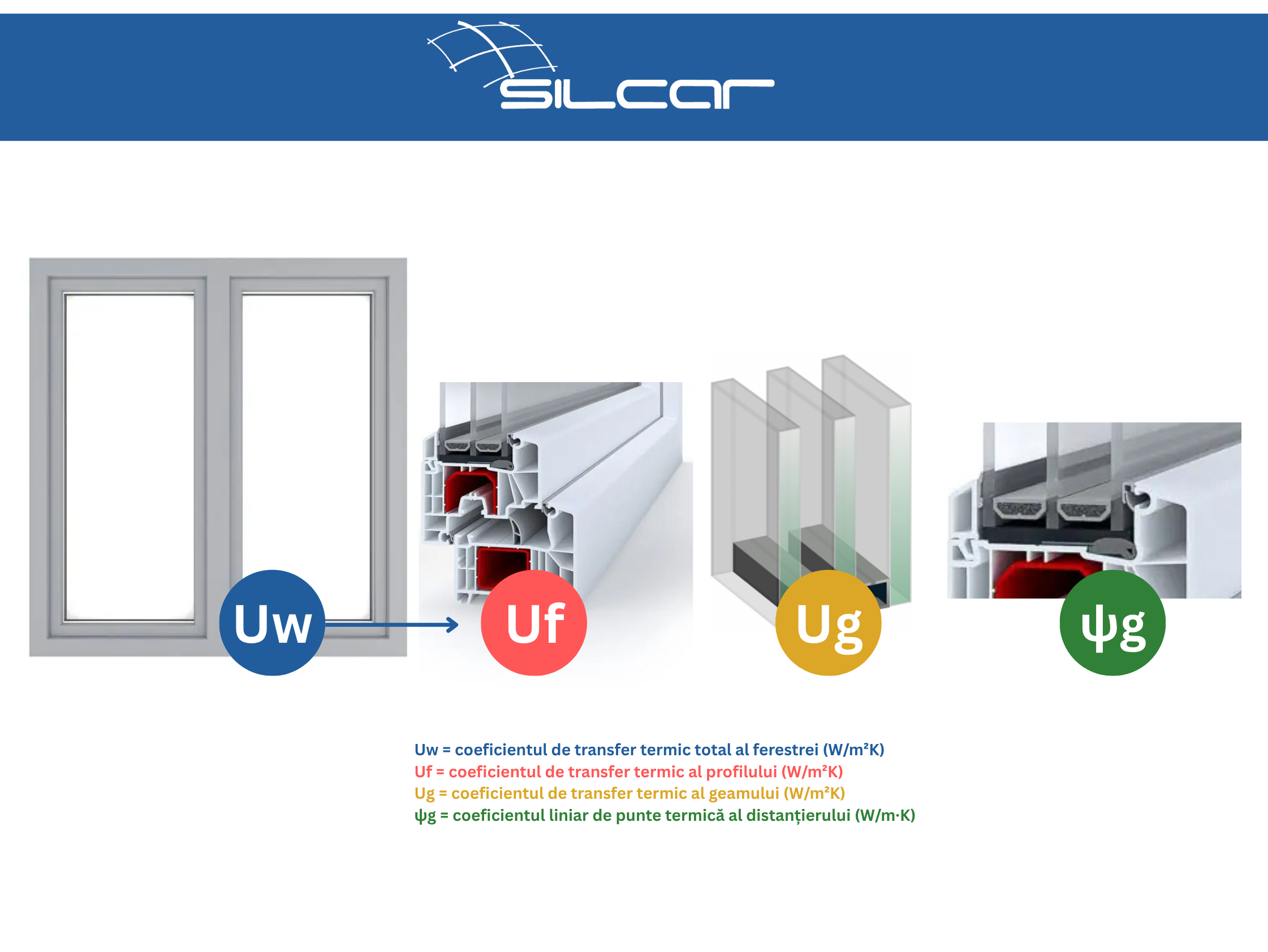




Understand how the Uf, Ug, Uw and ψg coefficients affect the thermal comfort and energy consumption of your home.
What Does the Uf Coefficient Mean for Windows and Doors, and How Does It Affect Energy Efficiency?

In a modern window and door system, performance is not determined by a single element, but by how all components work together. In this context, the Uf coefficient becomes one of the most important technical indicators, as it defines the thermal performance of the profile.
Uf represents the thermal transmittance coefficient of the window profile (frame + sash) and indicates the amount of energy lost through this area. The value is expressed in W/m²K, and its interpretation is straightforward: the lower the Uf value, the better the thermal insulation.
How Uf Contributes to the Overall Performance of a Window
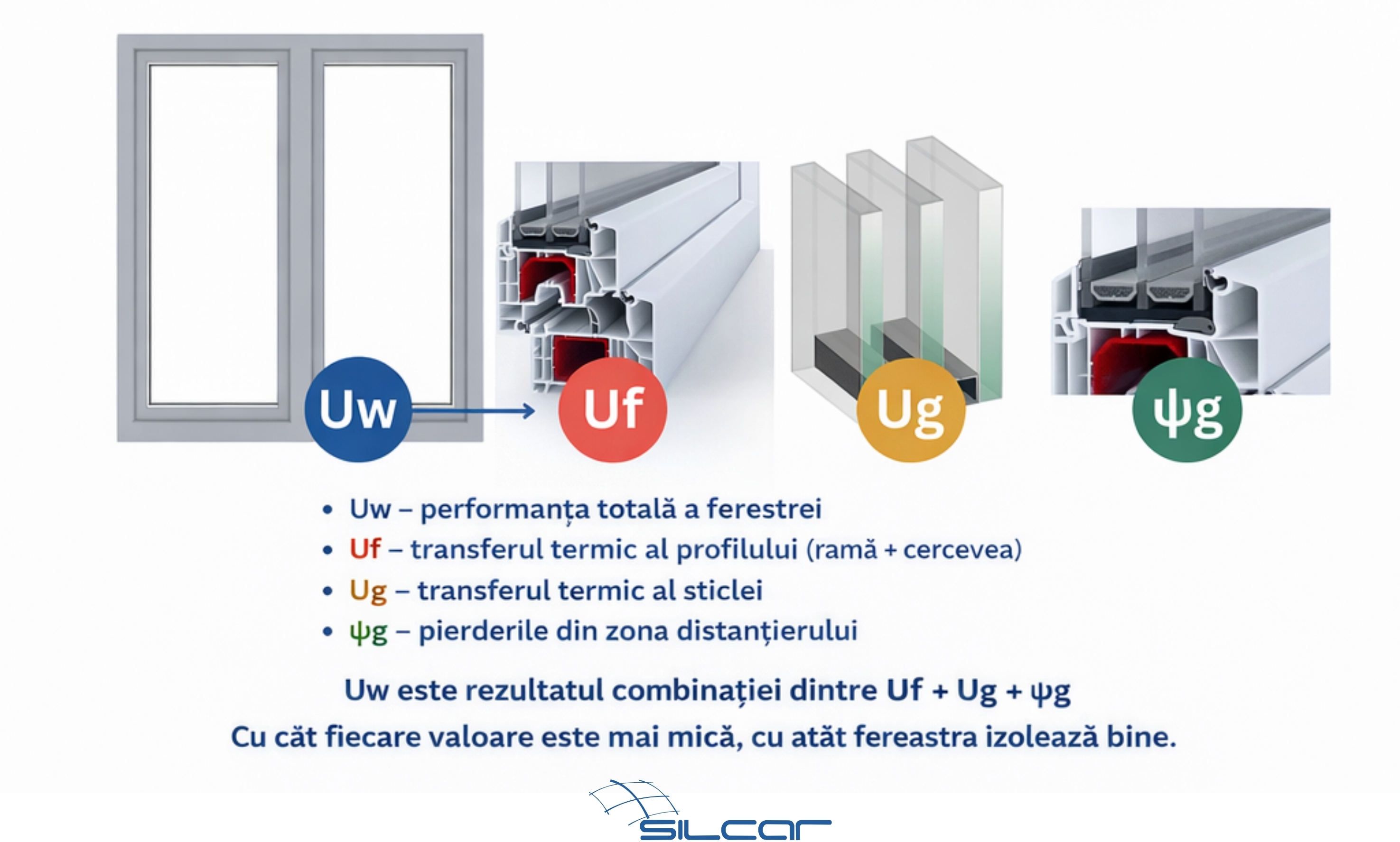
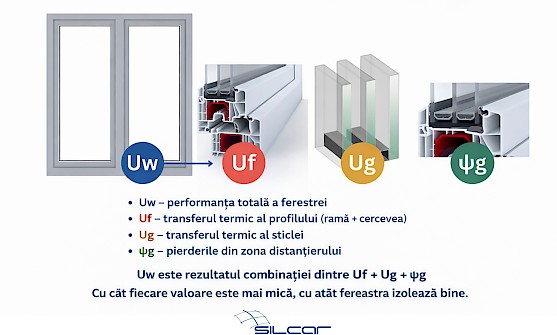
To properly understand the role of Uf, it is necessary to analyse the relationship between the main thermal coefficients:
| Coefficient | What it measures | Role in performance |
|---|---|---|
| Uf | Profile (frame + sash) | Heat loss through the structure |
| Ug | Insulating glass unit | Insulation through the glazing |
| ψg | Edge of the glazing | Linear thermal bridge |
| Uw | Complete window | Overall performance |
Uw is the combined result of all these factors, while the profile (Uf) remains the structural component with a major long-term impact.
Why the Uf Coefficient Matters in Practice
A profile with a low Uf value is not merely an improvement to a technical specification; it directly influences how the window performs in everyday use. The differences are not theoretical — they are reflected in indoor comfort and the home's energy consumption.
In the perimeter area of the window, where the profile is in contact with the indoor environment, an optimized Uf coefficient ensures a surface temperature closer to the ambient temperature. This helps eliminate the cold sensation frequently experienced with poorly insulated systems, even when the overall room temperature is appropriate.
Maintaining a higher temperature on the inner surface of the profile significantly reduces the risk of condensation. Its occurrence indicates a thermal imbalance and energy losses, which can affect materials and indoor air quality over time.
The Uf coefficient directly influences energy losses through the building envelope. The profile is a continuous component, and high heat transfer in this area generates constant losses, regardless of the glazing performance. For this reason, optimizing Uf contributes to reducing heating requirements in winter and limiting overheating in summer.
In practice, this translates into more balanced energy consumption and stable comfort levels, without significant temperature variations around the windows.
It is important to understand that window performance cannot be compensated for by optimizing only one component. High-performance glazing installed in a profile with a high Uf value will not deliver the expected results, as structural heat losses remain present.
These effects become noticeable in everyday use and can be directly observed in how the indoor environment responds to temperature variations:
-
more stable temperature around the window
-
elimination of the cold sensation near the profile
-
reduced risk of condensation
-
lower energy losses
-
optimized heating and cooling consumption
Without an optimized Uf coefficient, even high-performance glazing cannot compensate for structural heat losses, and the actual performance of the window remains limited.
What Influences the Uf Coefficient
The Uf coefficient is determined by the technical configuration of the profile and results from the way its structural components are designed and combined. It is not a fixed value but depends directly on the technical solutions used.
The main factors are:
| TECHNICAL ELEMENT | Impact on Uf |
|---|---|
| Profile material | PVC = naturally low thermal conductivity / Aluminium = thermal break |
| Number of chambers (PVC) | More chambers → higher thermal resistance |
| Profile depth | Deeper profile → longer heat-transfer path |
| Insulating inserts | Reduce thermal conductivity (particularly important for aluminium) |
| Sealing systems | Control air infiltration |
| Frame–sash junction | Critical area for heat loss |
The material and geometry of the profile directly influence heat transfer, while elements such as internal chambers, profile depth and insulating inserts contribute to limiting energy losses. Sealing systems and the frame–sash contact area complete the system by controlling air infiltration and stabilizing thermal performance.
In practice, performance results from the combination of these factors, not from a single element.
Interpreting Uf Values
For an informed decision, Uf values should be analyzed in the context of the system used and the requirements of the project:
| Uf Value | Thermal performance level | Typical application |
|---|---|---|
| > 1.4 W/m²K | Limited performance | Standard buildings |
| ~ 1.1–1.3 W/m²K | Efficient performance | Energy-efficient homes |
| ≤ 1.0 W/m²K | High performance | NZEB / passive buildings |

In modern systems, the trend is clear: reducing the Uf value to optimize energy consumption.
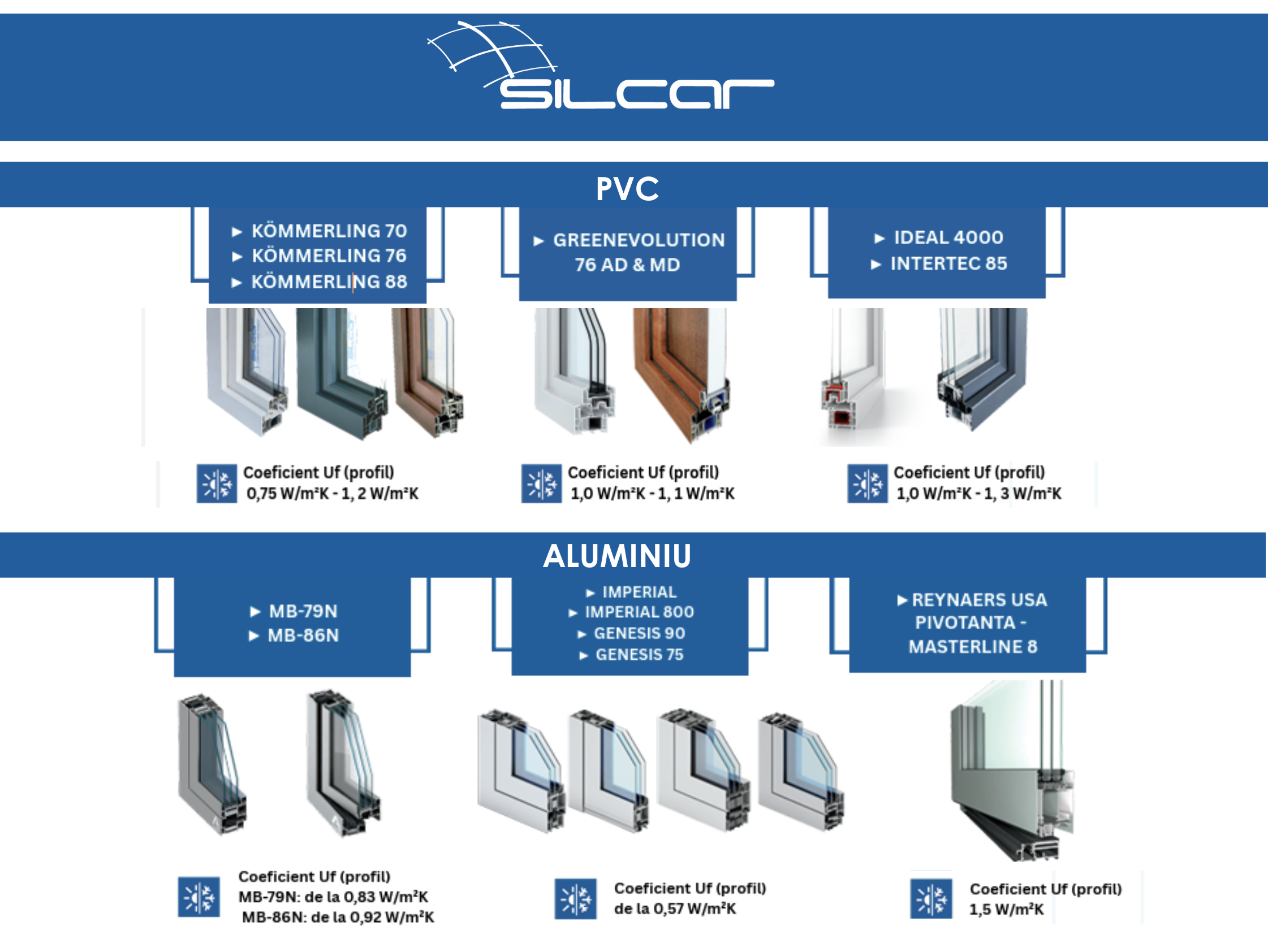
Real-World Examples from Systems Used by SILCAR
The Uf coefficient values vary depending on the technical platform and profile configuration, being influenced by the material, geometry and insulation solutions integrated into the system.
| System | Material | Uf Range |
|---|---|---|
| Kömmerling 70 / 76 / 88 | PVC | 0.95–1.20 W/m²K |
| Salamander | PVC | 1.00–1.10 W/m²K |
| Aluprof MB-79N / MB-86N | Aluminium | 0.83–0.92 W/m²K |
| Aliplast Genesis | Aluminium | ≥ 0.57 W/m²K |
| Reynaers MasterLine | Aluminium | up to ~1.40 W/m²K |
The values presented are indicative and may vary depending on the complete system configuration, including the profile type, glazing unit, element dimensions and installation details.
In practice, the differences between systems are determined not only by the platform used, but also by how these systems are configured and integrated into the project. The same system may deliver different performance depending on the choice of components and the way it is implemented.
In most energy-efficient residential applications, Uf values typically fall within the 1.1–1.3 W/m²K range, depending on the project requirements and the desired balance between performance, dimensions and design.
Actual performance is not defined by an isolated minimum value, but by the correct coordination of all system components — profile, glazing, sealing systems and installation.

A Common Mistake When Choosing Windows
One of the most common mistakes is evaluating a window exclusively based on its glazing (Ug).
The technical reality is different:
the profile (Uf) determines long-term thermal stability, while the glazing has a greater influence on direct heat losses.
An unbalanced system (high-performance glazing + low-performance profile) will have limited performance in actual use.
SILCAR’s Approach: Configured Performance, Not Estimated Performance
At SILCAR, windows are not selected based on isolated values, but through the complete configuration of the system.
The process is technical, not commercial:
- project analysis
- platform selection (PVC / aluminium)
- optimization of coefficients (Uf, Ug, Uw, ψg)
- proper integration into the building
The result is not simply a window that looks “good on paper”, but a system designed to perform correctly over time.
The Uf coefficient is not merely a technical parameter listed on a product datasheet. It is a key indicator that directly influences energy consumption, indoor comfort and the long-term performance of the window.
In a modern building, making the right choice starts with understanding the system, not comparing quotations.
Configure correctly. Build to a high standard.
Performance is not an option. It is a technical choice.
Talk to a SILCAR specialist
QUICK CONTACT
0741 229 077
✉ office@silcar.ro