Double Glazing vs. Triple Glazing
Termopan vs. Tripan
Analiză tehnică a performanței vitrării termoizolante
Double Glazing vs. Triple Glazing
Technical Analysis of Insulating Glass Performance
In everyday language, the terms “double glazing” and “triple glazing” are used to describe insulating glass units consisting of two and three panes of glass, respectively.
From a technical perspective, however, the difference between the two solutions is not simply a matter of the number of panes, but rather the measurable energy performance of the complete window assembly and the level of long-term indoor comfort.
1. What Double and Triple Glazing Actually Mean
Double Glazing
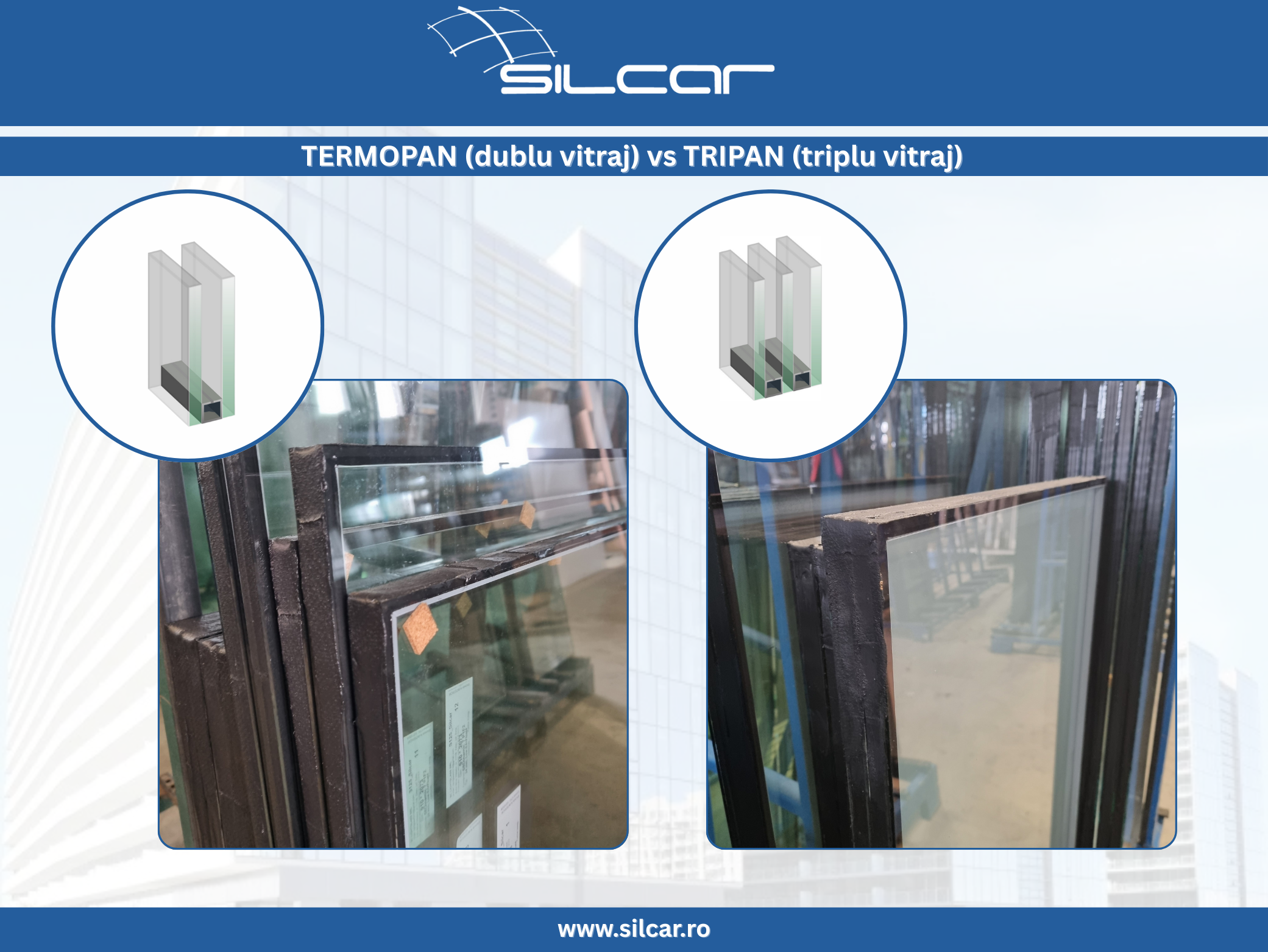
Double glazing is an insulating glass unit consisting of two panes of glass, separated by a sealed cavity filled with air or an inert gas such as argon or krypton.
Typical configuration: 4–16–4 mm
It is a suitable and efficient solution for many standard residential applications.
Triple Glazing
Triple glazing is an insulating glass unit consisting of three panes of glass, creating two sealed cavities filled with an inert gas.
Typical configuration: 4–14–4–14–4 mm
This structure provides significantly improved control of heat transfer, which explains the superior performance of triple glazing in modern buildings.
2. Heat Transfer – Where Triple Glazing Makes the Difference
Heat is transferred through a glazing unit by:
-
conduction (through the glass and gas)
-
convection (within the cavities)
-
radiation (between the glass surfaces)
The Ug Coefficient – The Key Indicator
Ug expresses heat loss through the glazing unit and is measured in W/m²K.
Indicative values:
-
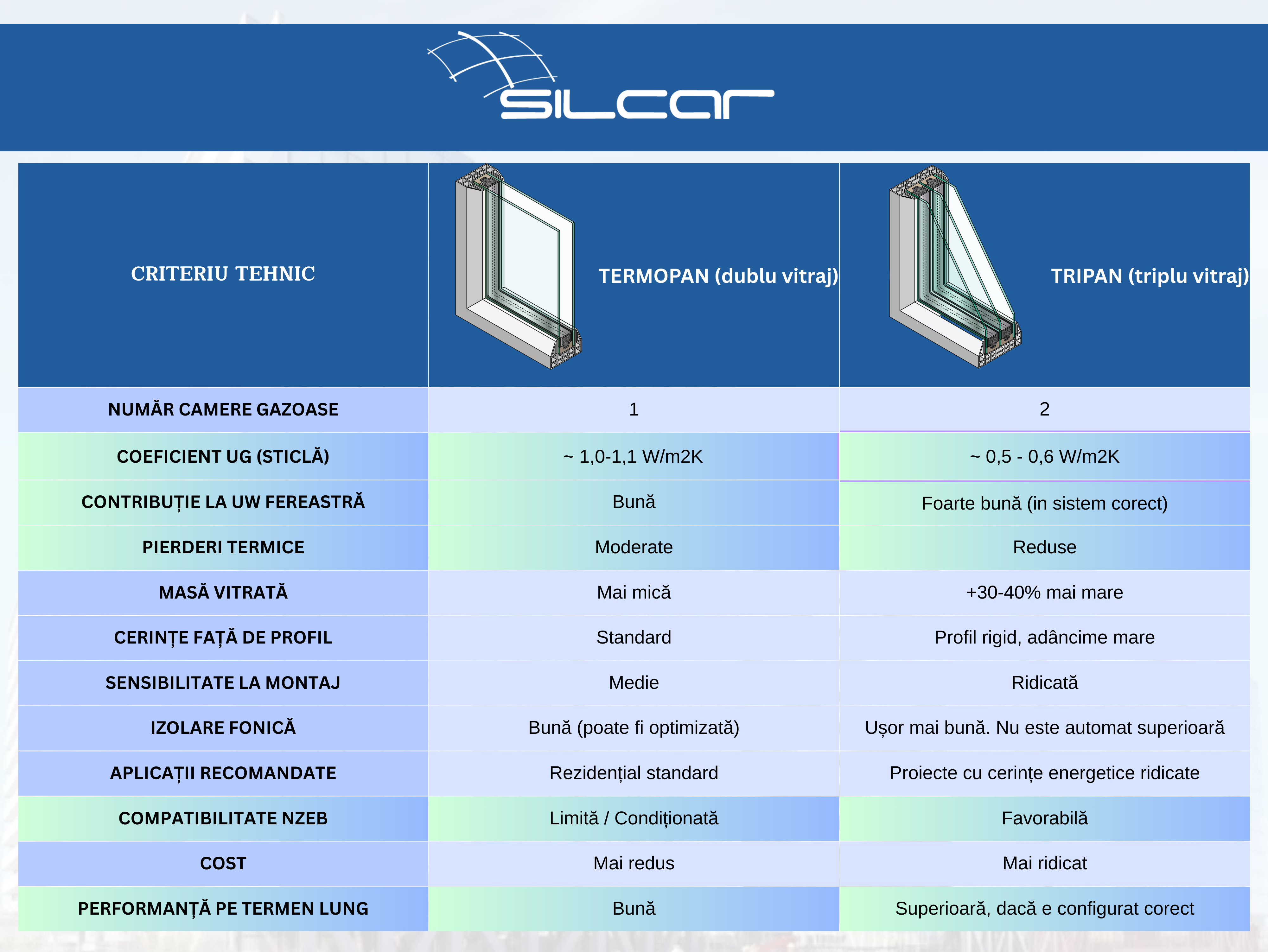
high-performance double glazing: Ug ≈ 1.0–1.1 W/m²K
-
high-performance triple glazing: Ug ≈ 0.5–0.6 W/m²K
In practical terms, well-configured triple glazing can reduce heat losses by almost half compared with standard double glazing.
This difference results from:
-
the presence of two thermal barriers
-
the use of low-E coatings
-
more effective control of internal convection
3. Cavity Size – Why Triple Glazing Performs Better
From a physical perspective, the cavities should not be as large as possible, but optimally dimensioned.
For argon, the optimum range is generally 12–16 mm:
-
cavities that are too small → increased conduction
-
cavities that are too large → increased convection currents
Triple glazing distributes thermal resistance across two optimally dimensioned cavities, making it thermally more stable, particularly under severe winter conditions or significant temperature variations.
4. From Ug to Uw – The Actual Performance of the Window
In operation, Uw, the thermal transmittance of the complete window, is more relevant than Ug alone.
Uw depends on:
-
Ug (glazing)
-
Uf (profile)
-
ψ (spacer)
-
glazing-to-profile ratio
Triple glazing demonstrates its full advantages only when:
-
the profile is designed to accommodate thicker glazing units
-
the installation depth is sufficient
-
low-thermal-conductivity spacers are used
In a correctly configured system, triple glazing enables Uw values that cannot be achieved with double glazing.
5. Weight and Mechanical Performance – What You Need to Know
Triple glazing is heavier:
-
+30–40% glazing mass compared with double glazing
This requires:
-
more rigid profiles
-
correctly dimensioned reinforcement
-
clearly defined size limitations for opening elements
When these conditions are met, triple glazing performs reliably and durably.
If they are not, some of its advantages may be compromised.
6. Acoustic Insulation – Not Automatic, but More Configurable
Triple glazing does not automatically guarantee superior acoustic insulation.
Acoustic performance depends on:
-
asymmetry in glass thicknesses
-
the system’s natural frequencies
-
the type of glass used
However, triple glazing offers greater configuration flexibility, making it possible to achieve superior acoustic performance in well-designed projects.
7. When Is Triple Glazing the Right Choice?
Triple glazing is particularly recommended for:
-
buildings with high energy-performance standards
-
modern, well-insulated homes
-
windows with deep profiles
-
installations carried out in accordance with applicable standards
Under these conditions, the difference compared with double glazing is no longer theoretical, but can be experienced in energy consumption and indoor comfort.
Conclusion
The difference between double and triple glazing is not a matter of fashion, but of the energy-performance objective.
-
Double glazing remains a balanced solution for standard applications.
-
Triple glazing is the appropriate solution for modern projects where minimal energy losses, thermal stability and long-term comfort are priorities.
From a technical perspective, you do not choose the number of glass panes; you choose the level of performance targeted for the complete window assembly.