How Do We Check the Quality of Insulating Glass?
Glass is one of the most important components of a window. It directly influences thermal comfort, natural light, and the energy efficiency of a home. That is why checking glass quality is an essential step — both during production and at the time of delivery or installation.
How Do We Check the Quality of Insulating Glass?
Glass is one of the most important components of a window. It directly influences thermal comfort, natural light, and the energy efficiency of a home. That is why checking glass quality is an essential step — both during production and at the time of delivery or installation.
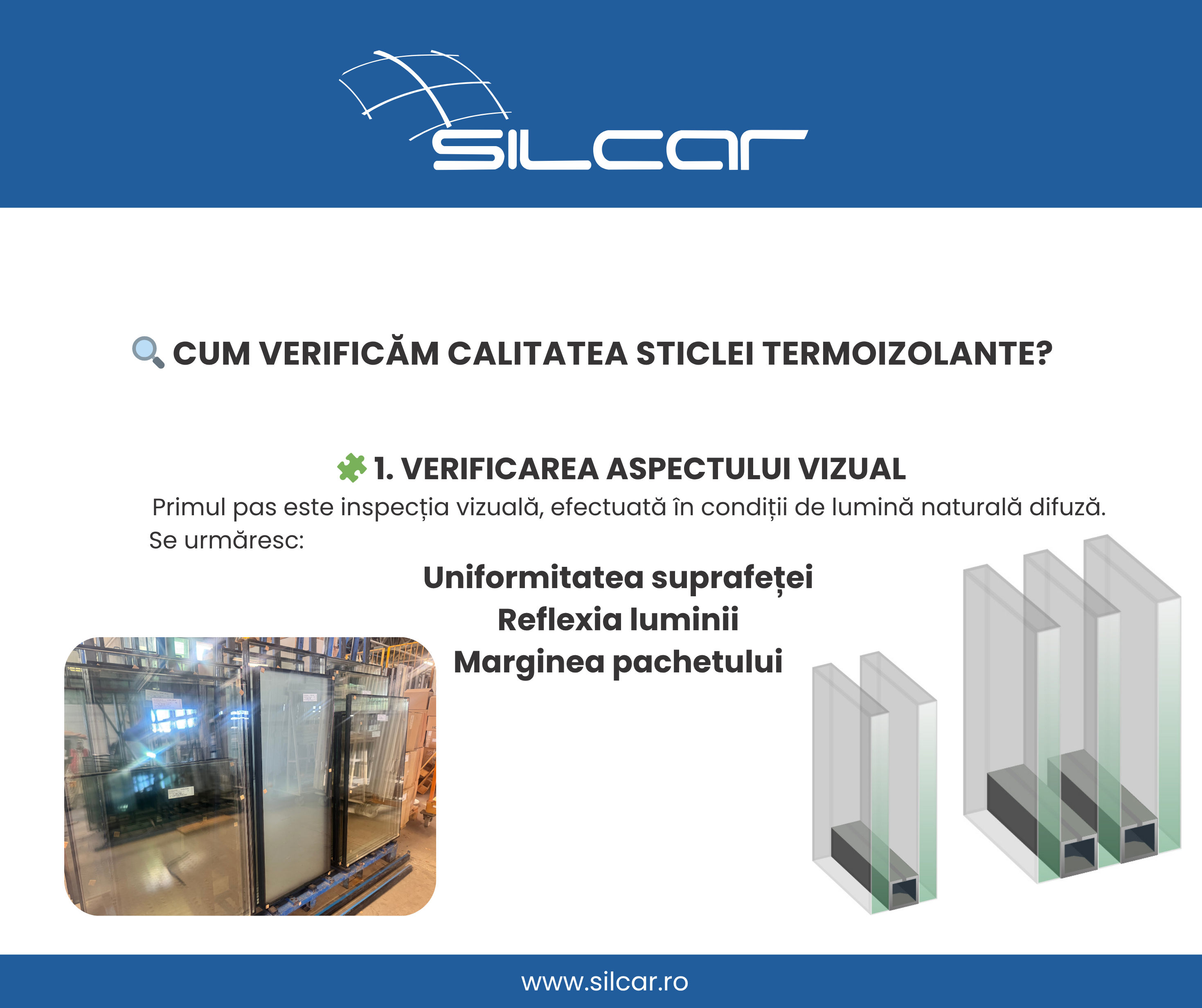
1. Visual Inspection
The first step is a visual inspection, carried out under diffuse natural light.
The following are checked:
• Surface uniformity – no scratches, stains, bubbles, or signs of contamination;
• Light reflection – high-quality glass has uniform reflections, without distorted areas;
• Edge of the insulating glass unit – properly sealed, with no signs of air infiltration or impurities.
International standards allow only minor defects that are not visible from a normal viewing distance (approximately 2 metres).
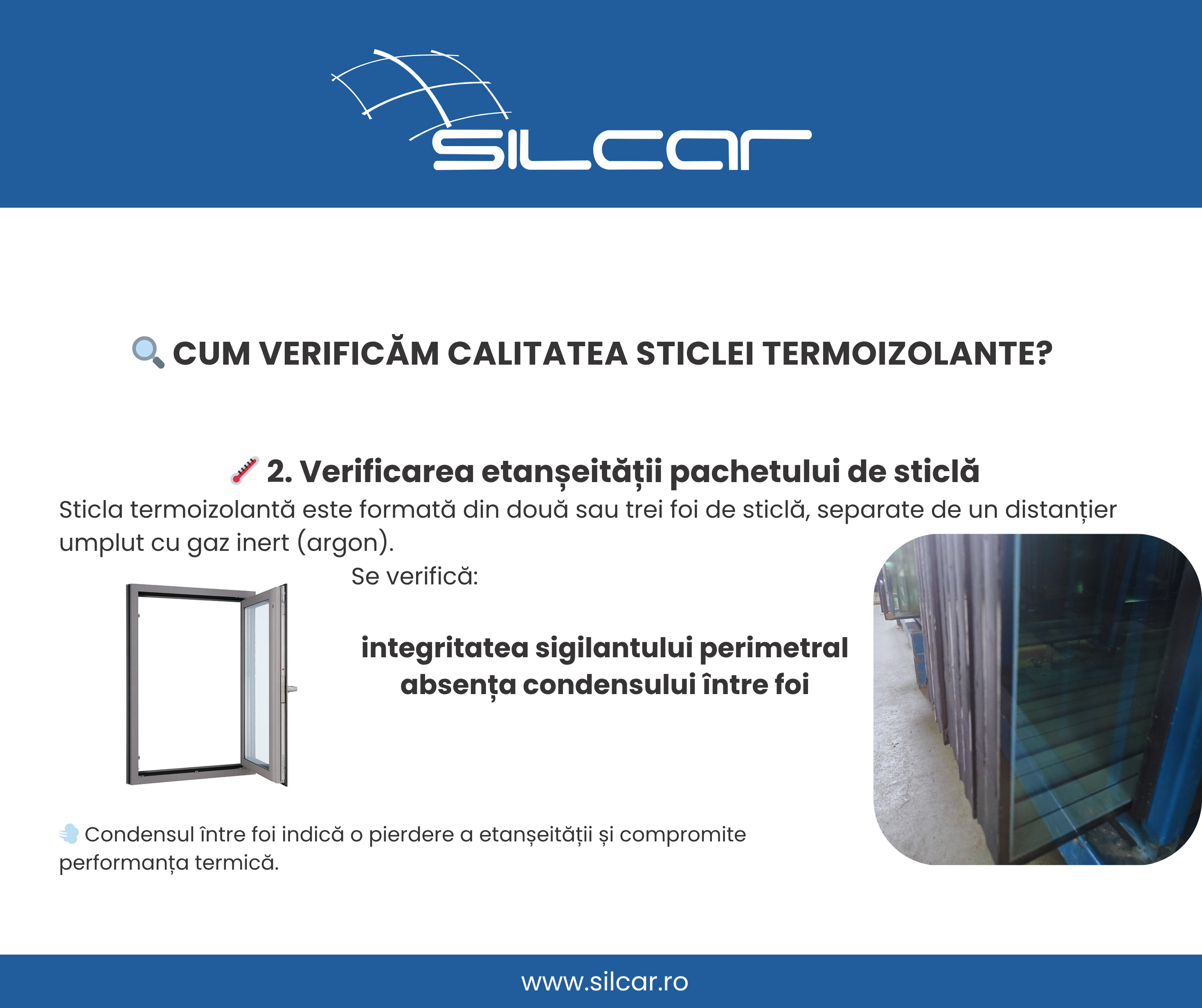
2. Checking the Insulating Glass Unit’s Airtightness
Insulating glass units consist of two or three panes of glass separated by a spacer filled with an inert gas, such as argon.
The following are checked:
• Integrity of the perimeter seal;
• Absence of condensation between the panes.
Condensation between the panes indicates a loss of airtightness and compromises the unit’s thermal performance.
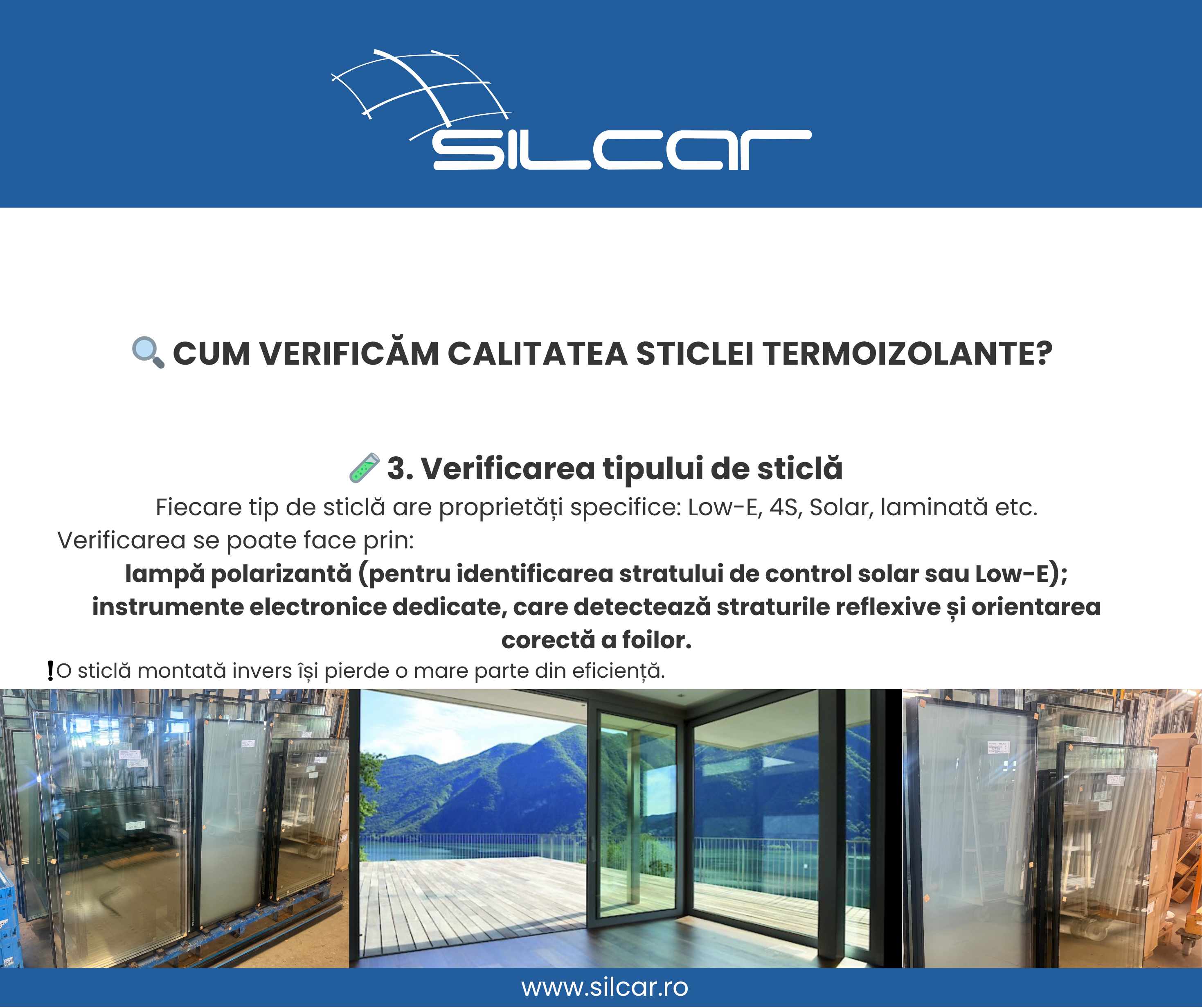
3. Checking the Type of Glass
Each type of glass has specific properties: Low-E, 4S, Solar, laminated glass, etc.
Verification can be carried out using:
• A polarizing lamp – to identify Low-E or solar-control coatings;
• Dedicated electronic instruments – which detect reflective coatings and verify the correct orientation of the panes.
Incorrectly installed glass can lose a significant part of its energy efficiency.
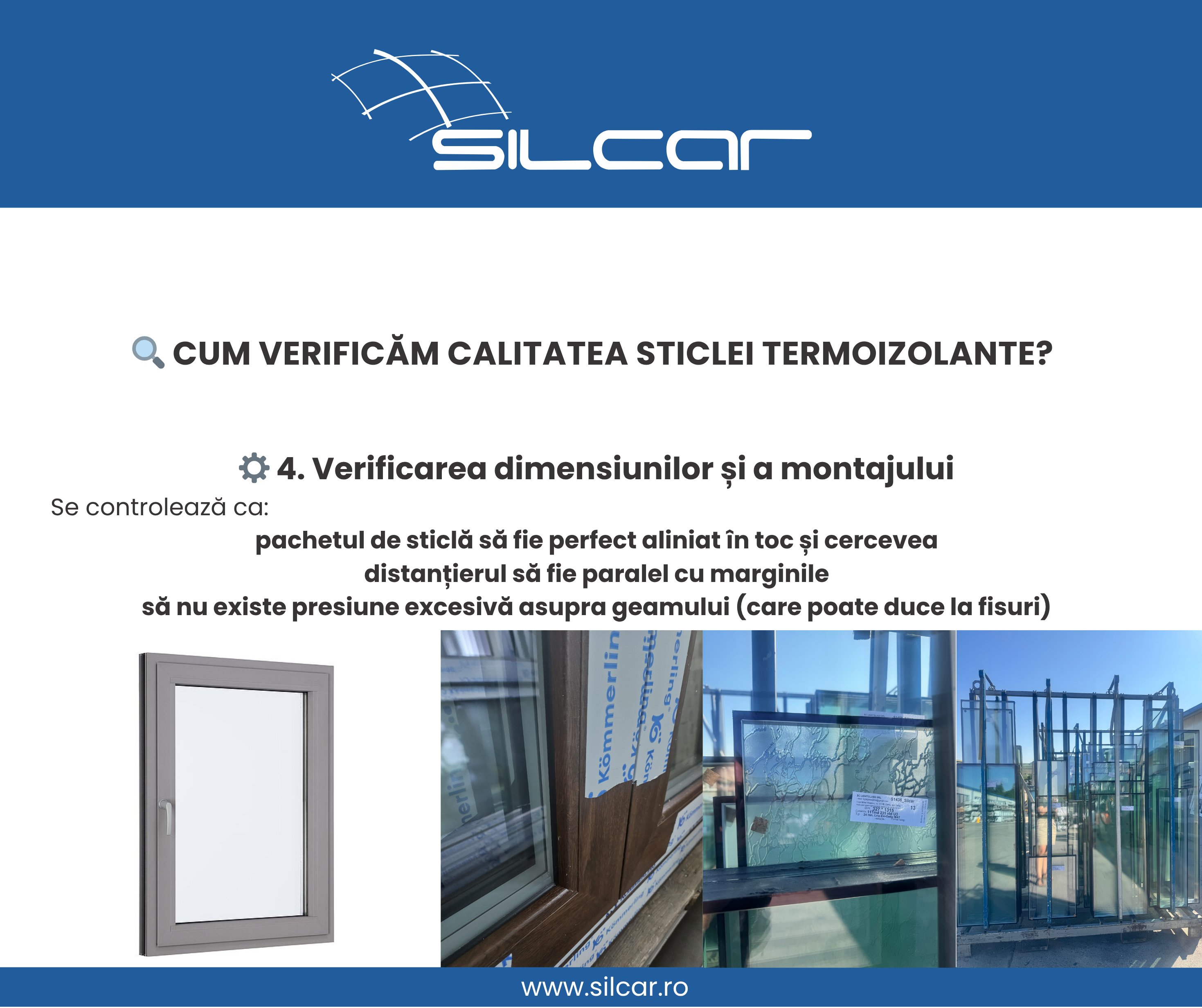
4. Checking Dimensions and Installation
It is important to ensure that:
• The insulating glass unit is perfectly aligned within the frame and sash;
• The spacer is parallel to the edges;
• There is no excessive pressure on the glass, which could lead to cracking.
Conclusion
A high-quality window depends on more than just a good profile — the glass makes a significant difference to the thermal, acoustic, and aesthetic performance of a building.
Regular and properly conducted quality checks help ensure a long service life and consistent performance.