Condensation on Windows – When Is It Normal and When Does It Indicate a Problem?
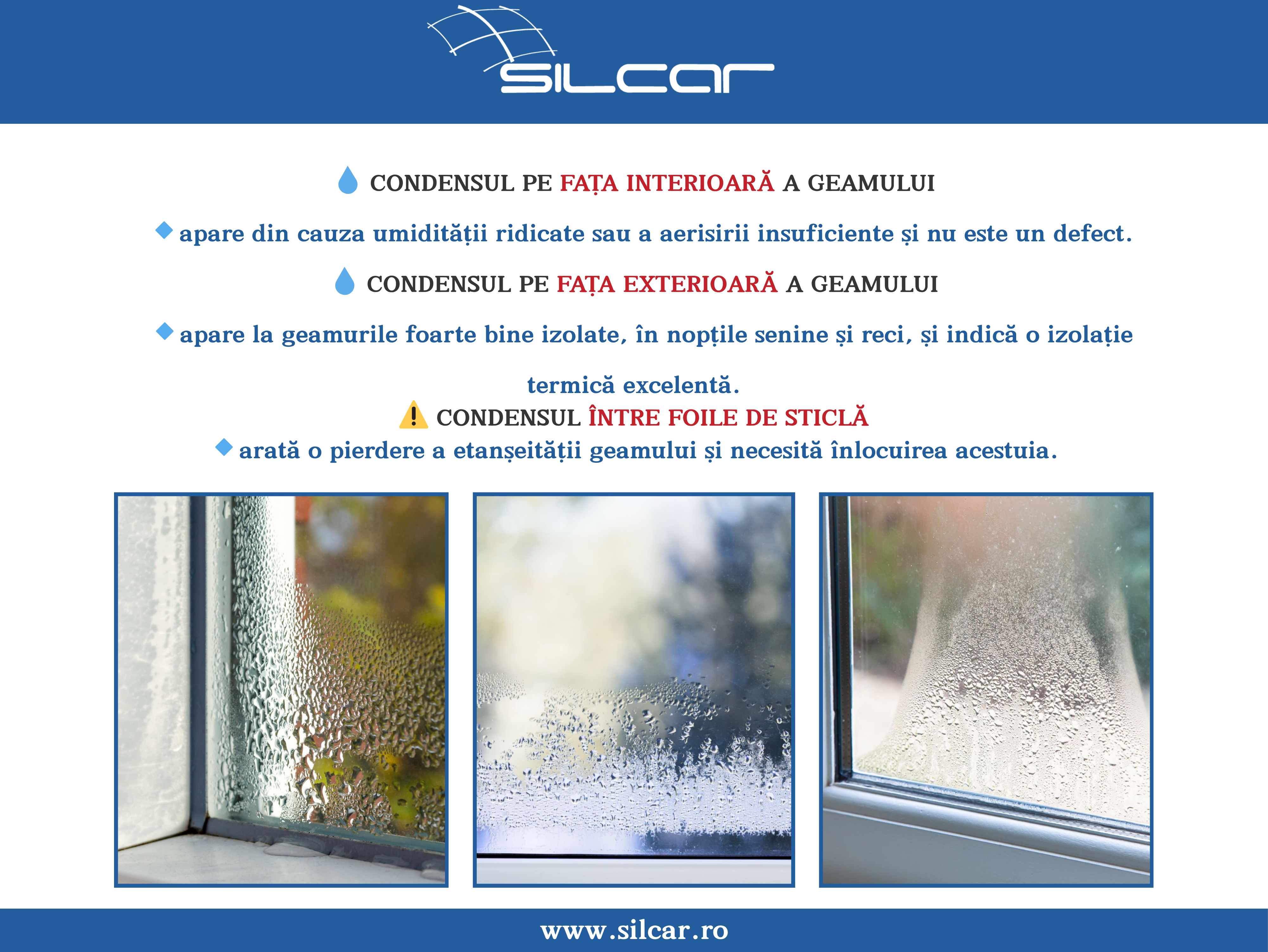
Condensation on windows is a natural phenomenon that can be normal (on the inner or outer surface) or may indicate a problem when it occurs between the panes of glass, which is a sign of a loss of airtightness in the insulating glass unit.
Condensation on Windows – When Is It Normal and When Does It Indicate a Problem?
Condensation is a natural phenomenon that occurs when warm, humid air comes into contact with a cold surface.
In the case of windows, it can appear on different surfaces of the glass, depending on temperature, humidity, and the level of insulation.
1. Condensation on the inner surface of the glass ➡️
It appears on the side facing the room. It is caused by:
- insufficient ventilation or excessive indoor humidity (kitchens, bathrooms, many plants);
- poorly heated rooms;
- significant temperature differences between indoors and outdoors.
Solution: ventilate the room daily and maintain a constant indoor temperature.
The appearance of condensation on this surface is not a defect of the glass, but a consequence of indoor humidity.
2. Condensation on the outer surface of the glass ➡️
It appears on the side facing outdoors. It occurs especially:
- at night, when the sky is clear and there is little or no wind;
- on modern windows with very good thermal insulation (low Ug value).
Important: this type of condensation is a sign of the glass’s thermal efficiency — it means that heat losses are minimal and the outer surface remains cold.
It is not a defect, but evidence of a high-performance window.
3. Condensation between the glass panes ➡️
It appears between the panes of the insulating glass unit.
In this case, condensation indicates that moisture has entered the cavity, which means that the seal has deteriorated.
⚠️ Attention: this type of condensation is a defect and requires replacement of the insulating glass unit.
Conclusion
Not every trace of condensation on a window indicates a problem!
- On the inner surface – it is related to indoor humidity.
- On the outer surface – it indicates excellent thermal insulation.
- Between the glass panes – it is a defect and requires intervention.
SILCAR recommends:
Regular ventilation of indoor spaces, avoiding sources of excessive humidity, and choosing windows with high thermal performance for optimum comfort and maximum energy efficiency.