What Does a Window Cross-Section Reveal About the System’s Real Performance?

Although a window may appear from the outside to be a simple element of the building façade, its interior conceals a complex system in which each component contributes to the building’s energy performance, durability and indoor comfort.
In reality, what determines the efficiency of a window is not only its design or the size of the glazed area, but also the way in which the technical components of the system are configured.
For architects, contractors and developers, understanding these elements is essential when correctly configuring the glazed elements of a building and aiming for high energy performance.
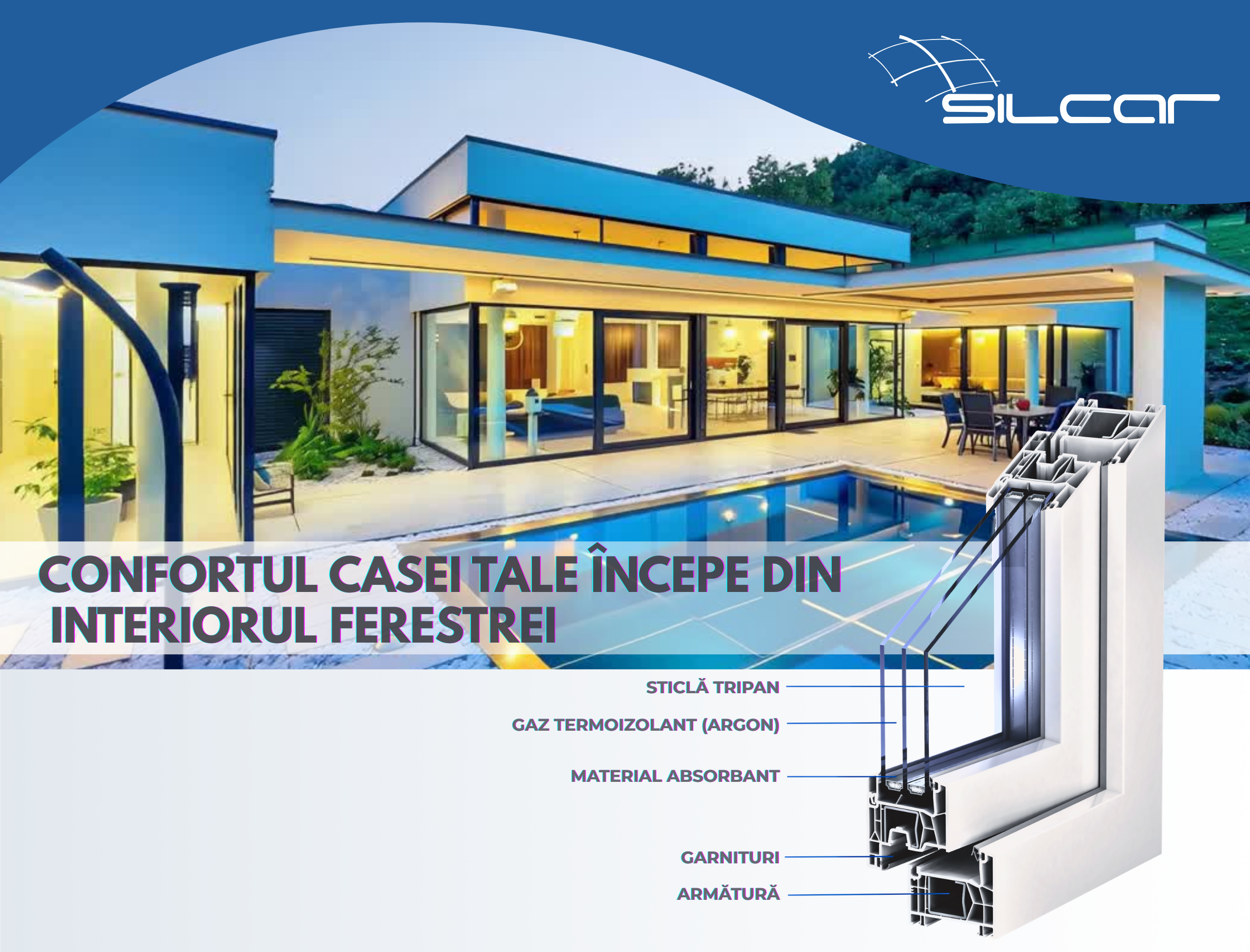
The adjacent image presents a technical cross-section of a PVC window equipped with a triple-glazed unit, highlighting the main components that contribute to the system’s operation and performance.
The Glazing Unit – The Key Element of Thermal Performance
At the centre of the system is the triple-glazed unit, consisting of three panes of glass separated by two intermediate cavities. This type of configuration is frequently used in modern projects with high energy-efficiency requirements.
The primary role of the glazing unit is to limit energy losses and contribute to maintaining a stable indoor climate.
The main advantages of triple glazing include:
- significant reduction of heat losses
- improved thermal comfort near the window
- reduced risk of condensation
- improved energy performance of the building envelope
Glazing represents a significant part of a building’s façade, and the performance of the glazing unit directly influences its energy consumption.
Insulating Gas (Argon)
To further improve thermal insulation, the spaces between the glass panes are filled with argon, an inert gas with low thermal conductivity.
The use of argon limits heat transfer between the interior and exterior, contributing to the overall energy efficiency of the window system.
This insulating gas provides several benefits:
- reduced heat transfer between interior and exterior
- improved glazing unit efficiency
- more stable temperatures around the window
Due to these properties, argon is widely used in windows designed for energy-efficient buildings and projects complying with NZEB standards.
Desiccant Material
Another important component of the glazing unit is the absorbent material, also known as a desiccant, located inside the spacer between the glass panes.
Its role is to control moisture levels inside the glazing unit and prevent condensation from forming between the glass surfaces.
More specifically, the desiccant contributes to:
- absorbing moisture inside the glazing unit
- preventing condensation between the glass panes
- maintaining the transparency and performance of the system over the long term
Although it is a discreet component, its presence is essential for the reliability and durability of the window.
Sealing Gaskets
In addition to the performance of the glazing unit, the sealing of the window system plays a fundamental role in the proper operation of the assembly.
Sealing gaskets are designed to prevent air and water infiltration and to contribute to the acoustic insulation of the interior space.
By using multiple levels of sealing, modern windows provide:
- reduced air infiltration
- protection against water penetration
- improved acoustic insulation
These elements contribute to maintaining a comfortable indoor climate and protecting the building structure over time.
Profile Reinforcement
The PVC window profile incorporates internal metal reinforcements, which provide rigidity and structural stability to the entire system.
This reinforcement is essential for maintaining the shape of the profile and ensuring the correct operation of the opening mechanisms.
Through the use of metal reinforcements, windows can provide:
- larger glazed elements
- dimensional stability over time
- safe and reliable operation of the opening system
The rigidity of the profile is therefore a key factor in the durability of the window and its performance in service.
The Window as Part of the Building Envelope
Analysing a technical window cross-section makes it clear that a window is not merely a joinery element, but a complex technical system that directly contributes to the performance of the building envelope.
The actual performance of a window results from the coordination of several factors:
- glazing unit configuration
- profile structure
- system sealing
- correct installation within the building envelope
In contemporary projects, windows are no longer selected solely for aesthetic reasons or from a standard catalogue. Instead, they are configured according to the building’s energy and architectural requirements.
A high-performance window therefore becomes an essential component of a building’s energy efficiency, directly contributing to the comfort and durability of the interior space.
SILCAR
PVC and aluminium windows and doors
Insulating glass units
0741 229 077
✉ office@silcar.ro
www.silcar.ro
We deliver throughout Europe.